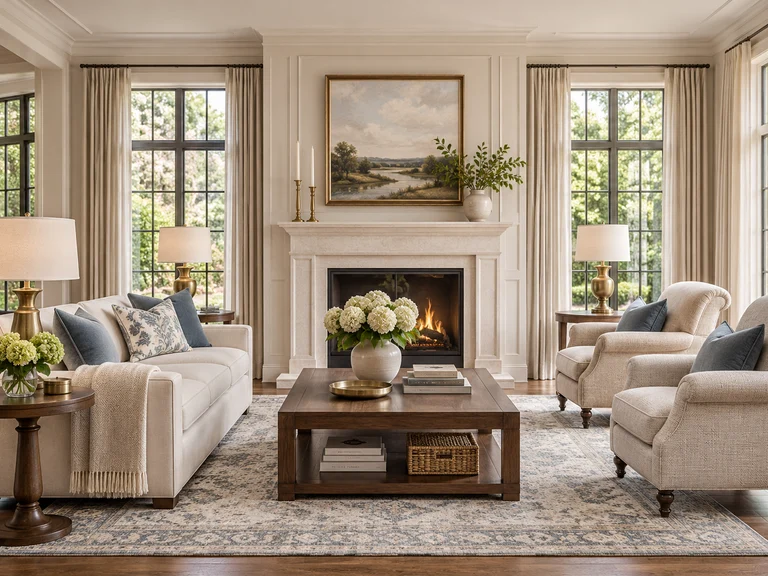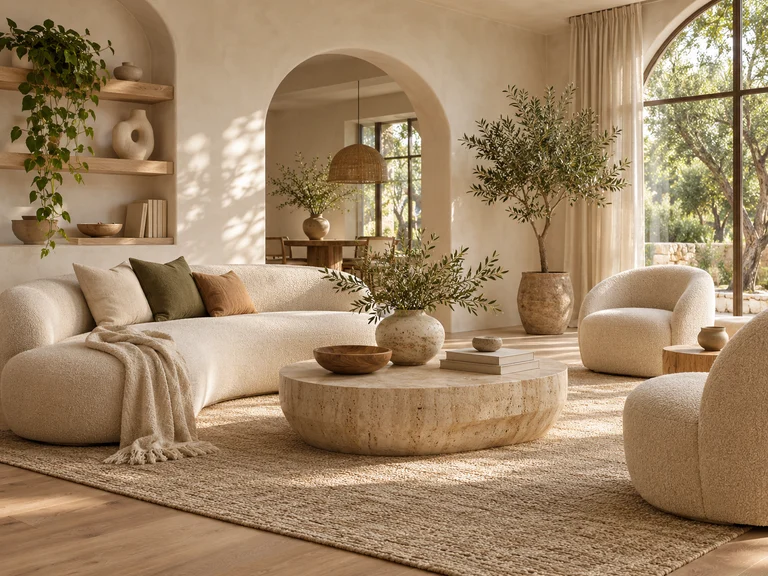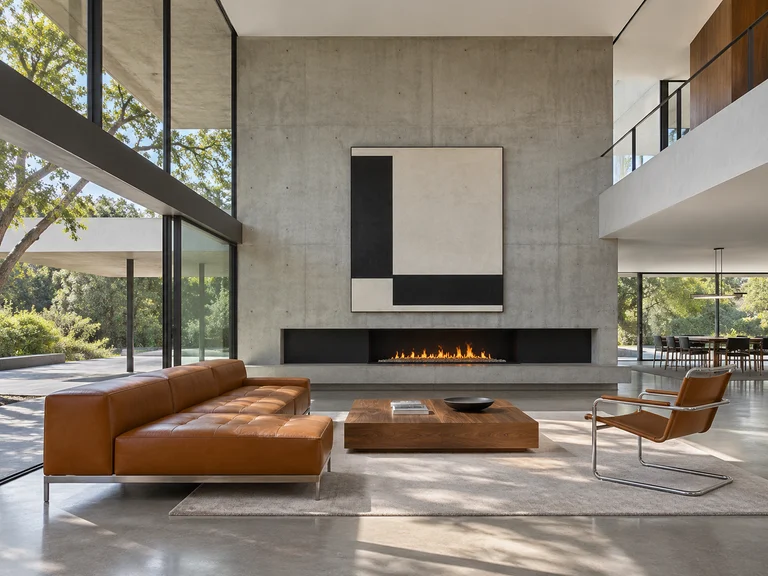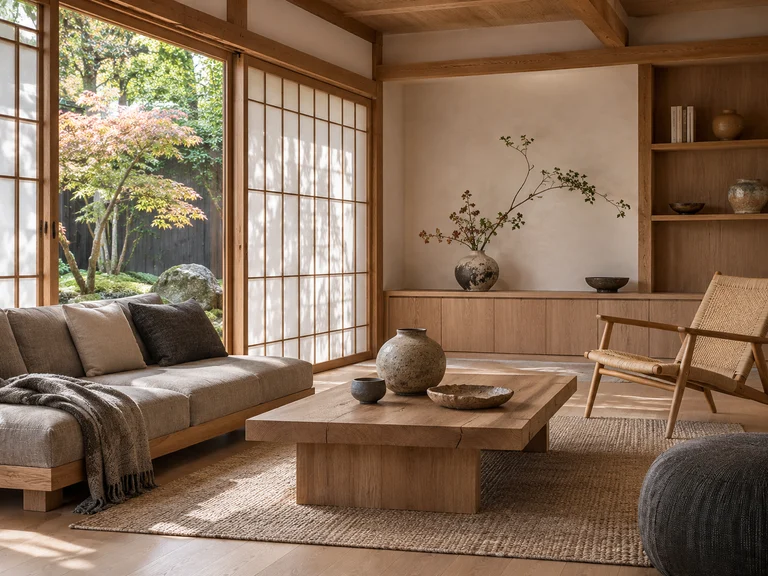
Use fewer pieces with a clear purpose.
A slim sofa with visible legs often feels lighter than a bulky low-backed model, but it still needs enough depth to be comfortable. Pair it with one flexible chair or stool instead of filling every wall with seating.
Round tables soften tight routes, nesting tables expand only when needed and wall-mounted lighting frees the surface below. These choices help decorate a small living room without turning it into a showroom of space-saving products.
- Measure the sofa depth as carefully as its width.
- Prefer one flexible piece over several occasional pieces.
- Keep the main route visually and physically open.
Give everyday clutter one calm destination.
Closed storage lowers visual noise, while a small amount of open shelving gives the room personality. Use the full height of one wall instead of adding several low units that break the space into fragments.
Multifunctional furniture works when both functions are genuinely useful. An ottoman with storage can replace a table, but a complicated convertible piece may consume more room and attention than it saves.
Connect color, light and sightlines.
A limited palette helps surfaces recede, but a small space does not have to be white. Repeat one wall color in curtains, upholstery or a rug, then add depth through texture and a few darker accents.
Keep windows clear, place mirrors where they reflect light rather than clutter and use several modest lamps instead of one harsh ceiling source. The result feels layered without becoming busy.