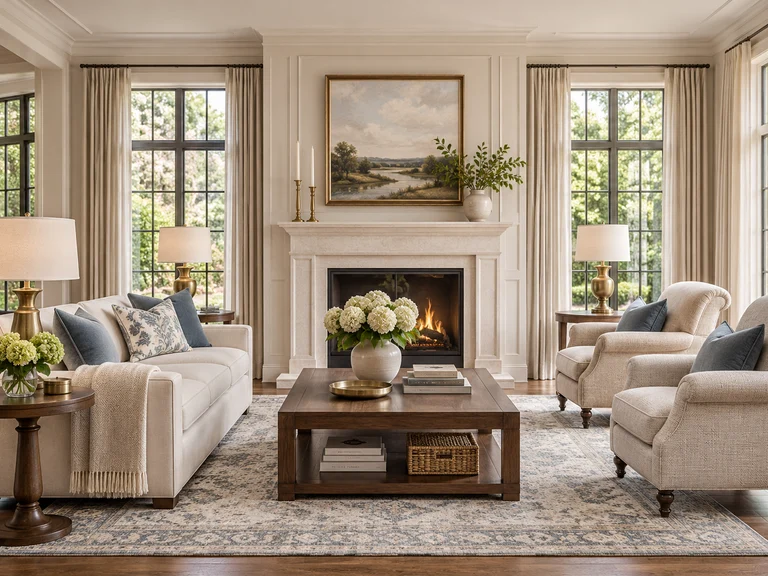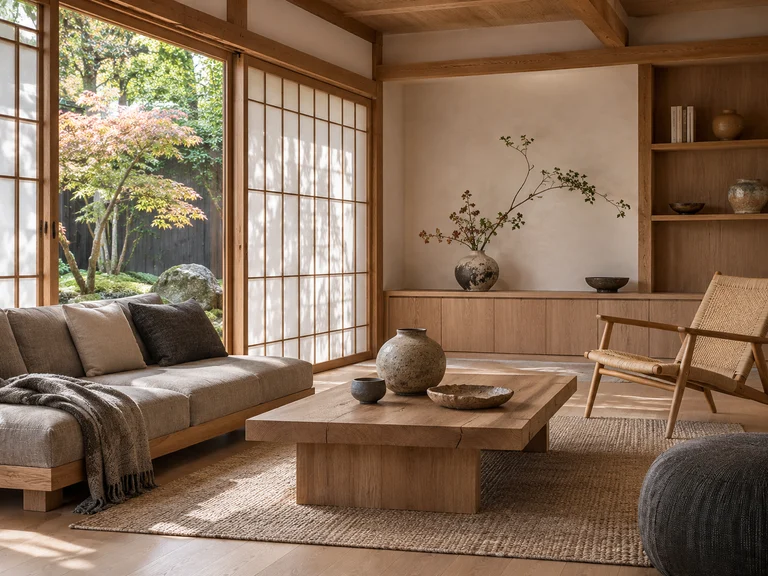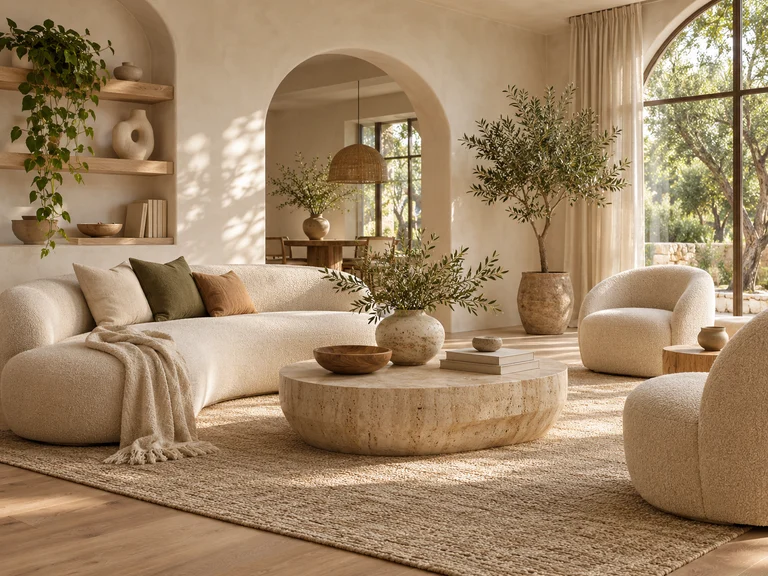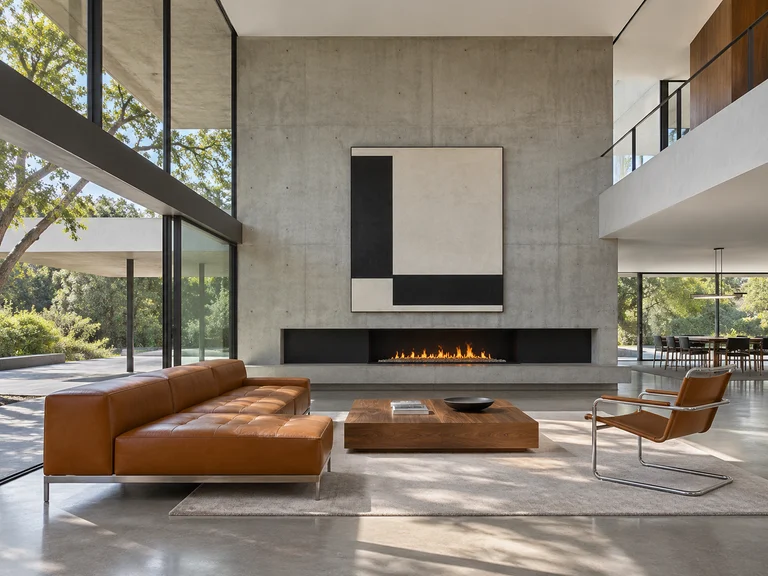
Choose a restrained palette with real texture.
Use two or three connected neutrals across walls, large furniture and rugs, then introduce one deeper tone for definition. Warm white, oak and charcoal feel different from cream, walnut and olive, but both combinations can support a modern interior.
Texture keeps a limited palette from feeling flat. Pair smooth plaster or painted walls with wool, linen, timber grain and a small amount of metal or stone.
- Repeat each major material at least twice in the room.
- Use contrast to define a focal point, not every object.
- Let natural texture replace unnecessary decoration.
Balance clean lines with a comfortable silhouette.
Modern furniture design for a living room can be rectilinear, sculptural or softly curved. Choose one dominant shape language and repeat it subtly in tables, lighting or accessories.
Avoid buying a matching set. A low sofa, simple timber table and one characterful chair create more depth when their proportions relate but their materials are not identical.
Use art, lighting and negative space as part of the design.
One large artwork or a carefully spaced group gives a modern wall more confidence than many unrelated small objects. Aim light at the surfaces and objects you want to notice, then soften the rest of the room with indirect lamps.
Leave some areas intentionally quiet. In the strongest modern living rooms, empty space separates ideas and makes the furniture, art and architecture easier to appreciate.