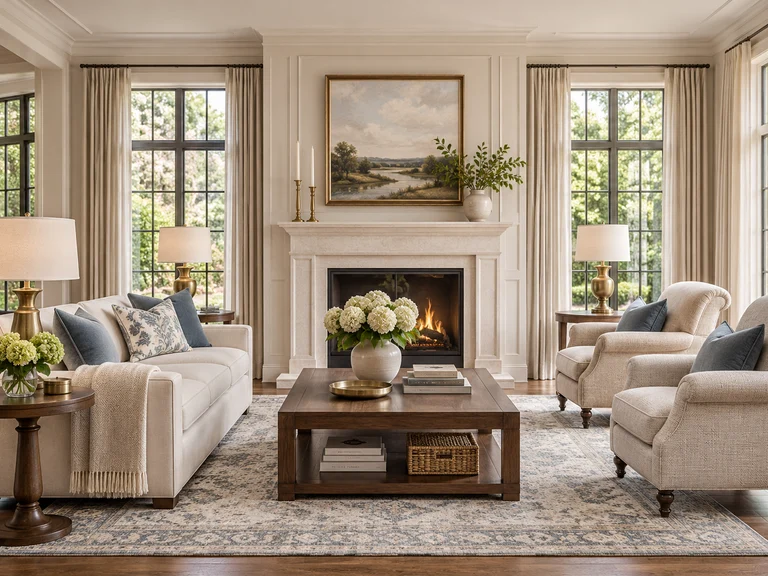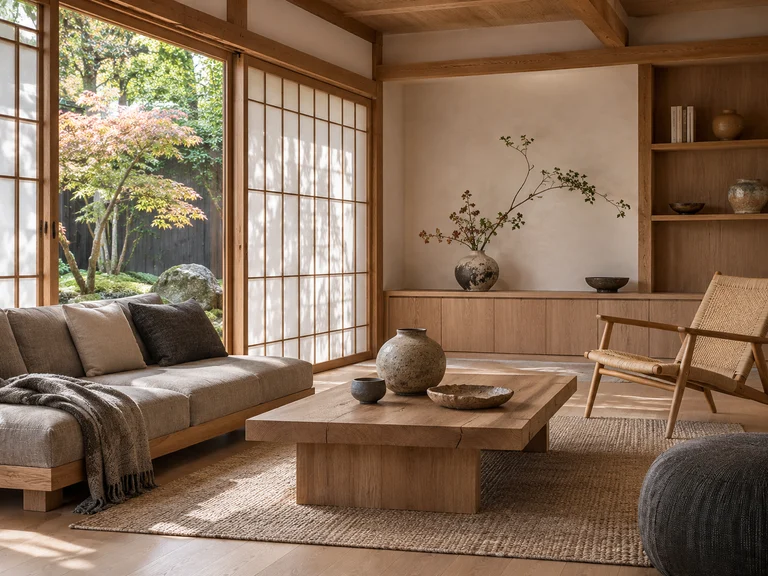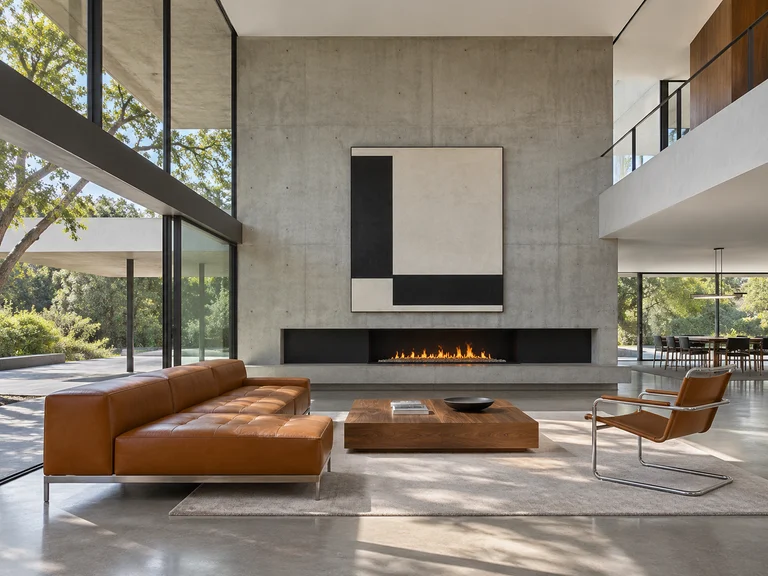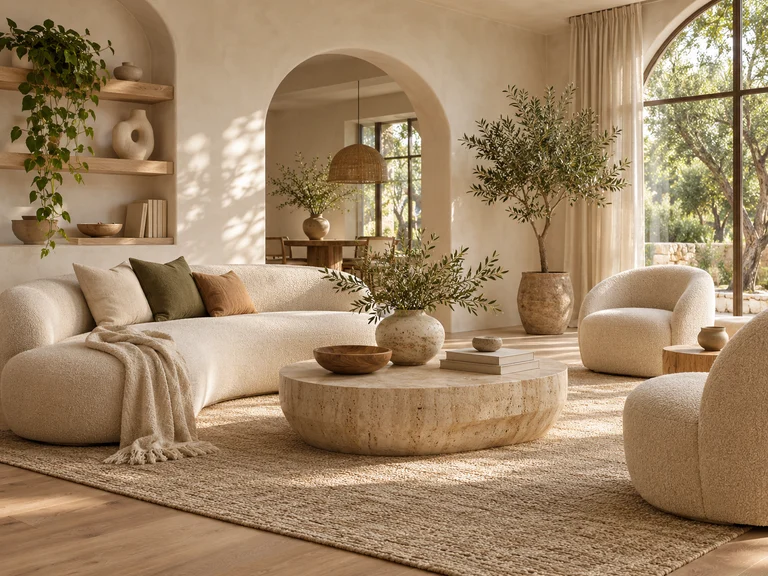
Use furniture and light as quiet boundaries.
Turn the sofa so its back marks the edge of the living area, or use a rug to connect a compact seating group. A narrow console can support the boundary without becoming a visual wall.
If the room also needs a desk, place it near natural light and choose a chair that can join the living area when guests arrive. Repeating color or wood tone across the zones keeps the whole apartment coherent.
- Keep the clearest route from entry to window unobstructed.
- Use rugs and lighting to signal a change of function.
- Choose furniture that can serve more than one zone.
Make meaningful changes that can move with you.
Large art, curtains hung high and a substantial rug can change the scale of the room without altering its structure. Plug-in wall lights add atmosphere where hardwiring is not possible, and removable treatments can introduce color after checking the lease and surface.
Focus the budget on pieces that solve a real need and suit a future home. A good lamp, comfortable chair or modular shelf often has more lasting value than a room-specific decorative fix.
Plan storage around what enters the room every day.
Apartments feel cluttered quickly when the living room becomes the default landing place. Give bags, devices, blankets and mail a defined home close to where they are used.
Use one tall storage piece or a consistent row of low units rather than unrelated small cabinets. A simpler outline makes the room feel more settled and leaves decorative space for the objects that matter.